

You’ve probably heard that type 2 diabetes is on the rise and has been for more than a decade. According to Diabetes UK’s latest published figures, more than 4.7 million people in the UK were registered as having diabetes in 2024–25, around 90% of whom have type 2 diabetes. It also estimates that almost 1.3 million people have undiagnosed type 2 diabetes and that approximately 6.9 million are living with prediabetes, although many may be unaware of it.
A diagnosis of prediabetes is an important wake-up call, but progression to type 2 diabetes is not inevitable. For many people, lifestyle changes can bring blood glucose back below the prediabetes range, substantially reducing the likelihood of developing type 2 diabetes.
How can you bring your average blood glucose down long term? For many people, and your doctor or specialist can usually advise, the simplest and most common approach is weight loss, but some background can really help make sense of it.
What does insulin do?
If you’ve heard about prediabetes, you may have also heard about insulin resistance. Insulin is produced by the pancreas, an organ that sits behind the stomach. It plays a key role in helping the body regulate energy, a prime source of which is glucose.
When we eat carbohydrate-containing foods, such as bread, oats, potatoes, rice, fruit, sweets, pastries or fizzy drinks, digestive enzymes break down their digestible carbohydrates into simple sugars. Much of this eventually enters the bloodstream as glucose, which our cells can use to produce energy.
We always have some level of glucose in our bloodstream to ensure a regular supply for important organs like the brain. Even if we haven’t eaten carbohydrates for many hours, the liver helps maintain blood glucose by releasing stored glucose and making new glucose.
In someone without diabetes, fasting blood glucose is normally kept within a narrow range. It might be around 5 mmol/L, which is equivalent to approximately 0.9g of glucose per litre of blood. For an adult with around five litres of blood, that’s around 4.5g, or just over one teaspoon of glucose circulating at that moment.
Though it’s worth noting that a 4g teaspoon of granulated sugar, the kind we might add to food at home, is a mix of two simple sugars, half glucose, and half fructose. But I still think it’s helpful to be able to visualise how little sugar circulates in the blood when not processing food.
Insulin plays a key role in maintaining a narrow blood glucose range. The pancreas produces insulin when it senses the incoming sugar as a way of telling the cells of the body that there’s extra fuel available; “come and get it,” it says. So, cells like those in our muscles can take up glucose molecules as they pass by, reducing the concentration in the bloodstream.
What does an HbA1c test show?
When glucose remains elevated, more of it reacts with proteins around the body in a process called glycation. Glycation is happening all the time, and the HbA1c test measures the proportion of haemoglobin – the oxygen-carrying protein inside red blood cells – that has become glycated. Red blood cells circulate for around 120 days, and HbA1c reflects average glucose exposure over the previous 2 to 3 months, with the most recent weeks contributing more heavily. Some glycation is normal, but too much can cause problems.
A simple way to picture glycation is to think of sugar as sticky. Spill some on a kitchen worktop and, with a little moisture, it begins to stick to the surface. Glycation is not literally the same process, but it’s a useful mental image: when glucose remains elevated, more of it can ‘stick to’ or attach to proteins throughout the body, altering how some of them function.
In the UK, an HbA1c of 42–47 mmol/mol is classified as high risk of type 2 diabetes, commonly called prediabetes. In the USA, the threshold begins lower, at 39 mmol/mol, and results are usually expressed as a percentage: 5.7–6.4%.
And insulin resistance?
Back to insulin resistance. For insulin-sensitive cells, like those in skeletal muscle, they respond by opening their doors to accept glucose. Insulin also tells the liver to reduce its own glucose production. Insulin resistance describes a state in which these processes are muted, leaving more glucose circulating in the bloodstream for longer.
Temporary insulin resistance can sometimes be part of a normal response, such as during short-term stress, when the body tries to ensure that enough glucose is available to working muscles, which can take up glucose, even without an insulin signal, for a possible fight-or-flight response. This is quite different from persistent insulin resistance lasting months or years, although chronic or long-term stress can contribute to its development and progression.
Insulin resistance often develops before blood glucose becomes abnormal. Initially, the pancreas compensates by producing more insulin, as if it’s shouting louder, “come on cells, there’s loads of energy available, fill your boots!” so glucose may remain within the normal range.
If insulin resistance progresses and the pancreas can no longer produce enough insulin to compensate, fasting and post-meal glucose begin to rise.
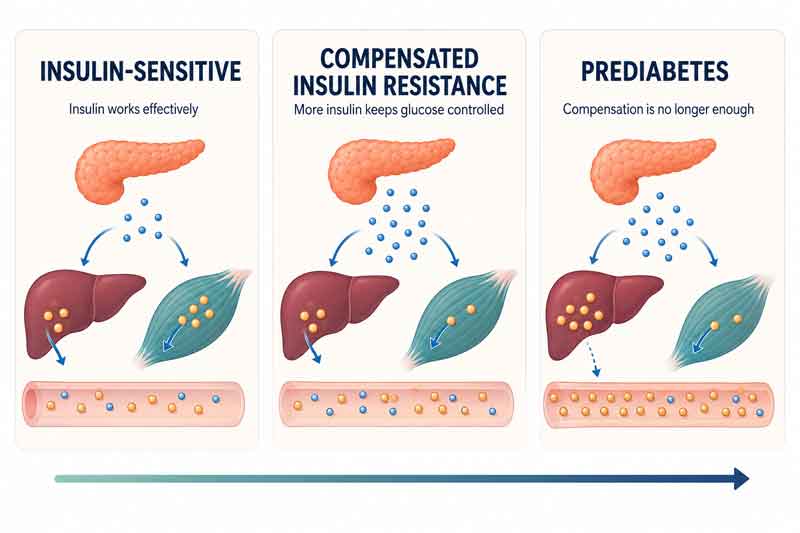
Insulin resistance also affects the liver. Normally, insulin tells the liver to reduce glucose production after a meal. When the liver becomes resistant to that signal, it may continue releasing glucose even though there is already plenty available.
The significance of personal fat threshold
When more energy is entering the body than it uses, some of that excess is stored as fat. This subcutaneous fat, the fat stored beneath the skin, say around our buttocks, legs, arms, and so on, has a limited capacity that differs considerably between people. Once someone exceeds their own capacity to store fat safely, more may reach the liver. The liver can then accumulate fat and export more of it, increasing its delivery to other tissues, including the pancreas.
Professor Roy Taylor calls this individual limit the personal fat threshold. It helps explain why type 2 diabetes can develop at very different body weights: the important issue is not simply how much someone weighs, but whether they have exceeded their personal capacity to store fat safely.
In susceptible people, excess fat in the liver can worsen liver insulin resistance, while excess fat reaching the pancreas is associated with impaired function of the beta cells that produce insulin. This can contribute to a gradual progression towards prediabetes and, without effective intervention, possibly type 2 diabetes.
It’s a slow process, often taking years to get to the point of prediabetes. And I think there are four helpful things to notice about the process I’ve described.
- Fat can accumulate in the liver and pancreas, which reduces their capacity to work well.
- We’d expect to see a slow rise in the result of an HbA1c test over years. And although an HbA1c below 42 mmol/mol is in the normal range, if your result seven years ago was 33 mmol/mol, it’s not difficult to see progression over multiple tests.
- It’s not just about eating sugary foods; any excess in energy can lead to weight gain, and so the potential of increased liver and pancreatic fat storage if we exceed our personal fat threshold.
- Working muscles can take up glucose, even without an insulin signal.
Three strategies for reducing your risk
At the beginning of this article, I suggested that for some people, fat loss can bring their blood glucose levels below prediabetes. If the liver and pancreas function is muted by stored fat, then what we really want to do is help the body clear fat from these organs.
For people with established type 2 diabetes, research led by Professor Roy Taylor has shown that losing around 10–15% of starting body weight can produce remission in a substantial proportion of participants, although it doesn’t work for everyone.
Earlier in the process, more modest weight loss can be really valuable. In the US Diabetes Prevention Program, an intensive lifestyle intervention targeting 7% weight loss and 150 minutes of weekly activity reduced progression to type 2 diabetes by 58%.
| An important side note. Anyone using insulin or medicines that can cause low blood sugar, such as sulfonylureas, should speak to their diabetes clinician before making substantial dietary or exercise changes, as their medication may need adjusting. Similarly, if you’re pregnant, frail, or undergoing other medical treatment, please get advice from a clinician who knows your medical history before any substantial change. |
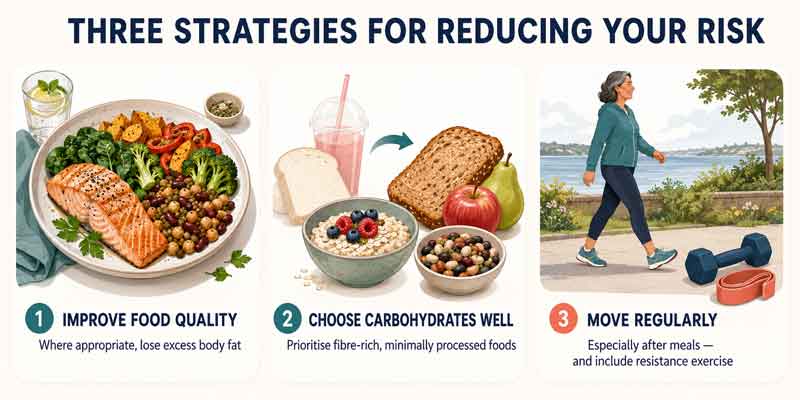
So, strategy one is diet changes to lose fat.
And, given other characteristics of prediabetes, two further strategies can help too.
Strategy two, improve the amount and quality of carbohydrate foods. Given that prediabetes indicates our body is struggling with blood glucose, reducing sugary drinks, sweets, refined grains, and large portions of rapidly digested starches, such as white bread, many breakfast cereals, white rice, and processed potato products, could help reduce post-meal glucose peaks.
Replacing some of these with less processed foods rich in fibre, such as beans, lentils, whole grains, vegetables, and whole fruit and berries, can also improve fullness and overall diet quality.
For strategy three, since skeletal muscles are an important storage site for glucose, most forms of movement or exercise can be beneficial, and movement after eating, even walking, ideally starting within 30 minutes of eating, is especially helpful for managing the glucose arriving through digestion.
There’s no single way to put these strategies into practice, and the right priorities will depend on individual circumstances, preferences, and starting point. I prefer a food-quality-first approach, which can support fat loss while improving the amount and quality of fibre and protein we eat. For movement, walking is often an accessible starting point, particularly after meals. I also recommend regular resistance exercise, which can help preserve muscle during weight loss while improving its capacity to use and store glucose. Stress, sleep and relationships can make a meaningful difference too.
The most effective approach is rarely about trying to change everything at once, but about identifying which changes will offer the greatest benefit for you and finding realistic ways to make them part of everyday life.